
There was a time when dealers wrote to museum curators for help on difficult paintings. I am told that some of them even replied. But this hasn't been the case for many decades and some of us now write to museum curators to assist them with their own collections.
Read MoreConnoisseurship & Emma Soyer - Lecture at the Royal Academy (25/06/26)
Some may be interested in a talk we delivered on Emma Soyer at the Royal Academy last week. We recently recorded a reduced version of the same lecture, which can now be found on YouTube. I also include a transcript of the earlier talk below.
Read MoreEmma Soyer, Michaelina Wautier & Connoisseurship
It used to be an advantage to re-attribute the works of female painters to their more lucrative male counterparts. But those days are behind us and I suspect we have reached the point where it is advantageous to do the opposite. But two wrongs do not make a right and it is a mistake to sacrifice academic rigour for short-term advantage, even when rebuilding the life and career of a lost female painter.
Read More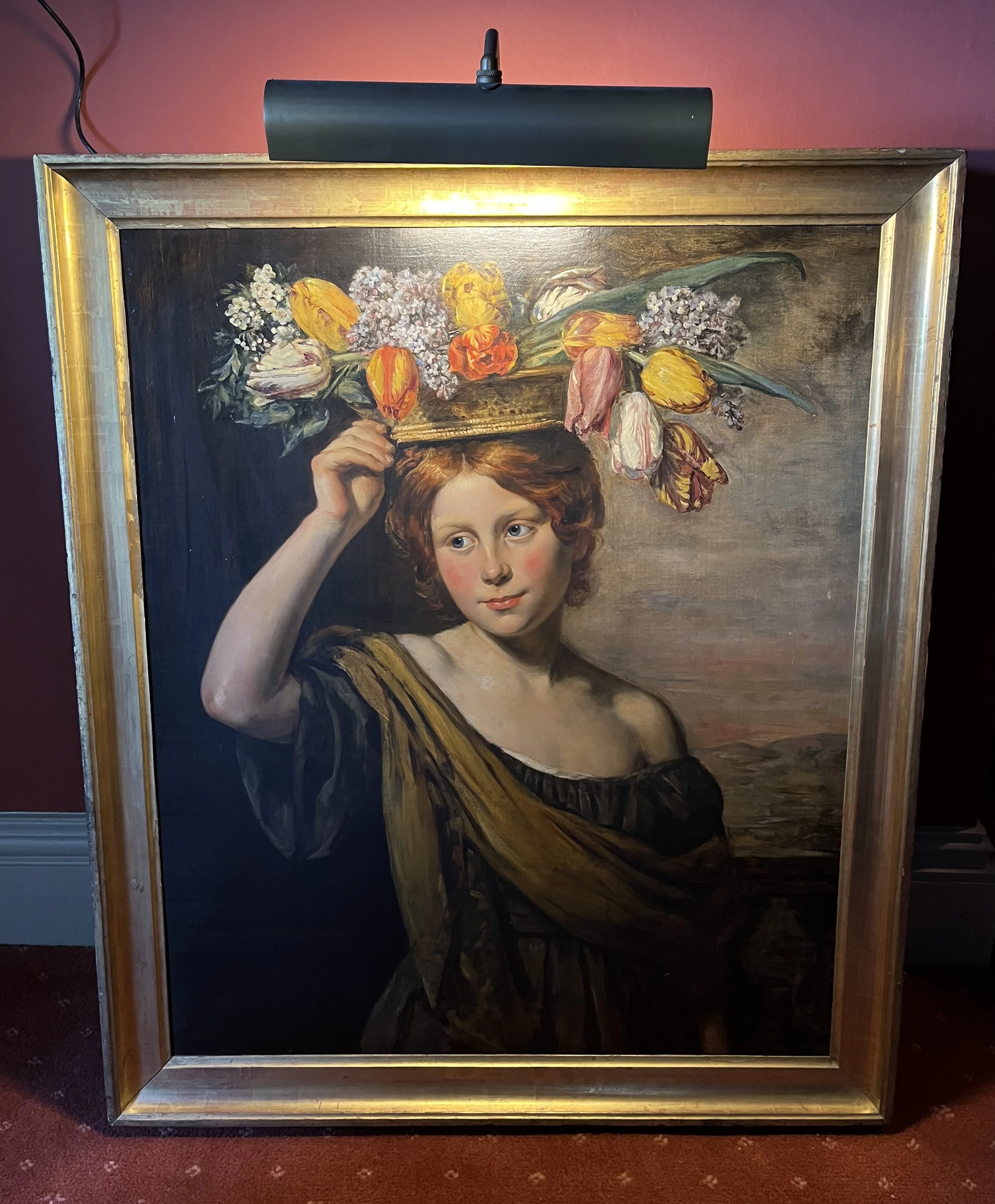
Emma Soyer, new Kitchens & the National Gallery of Victoria.
Congratulations to the Lady of Melford Hall on her new kitchen, and to the National Gallery of Victoria on acquiring another excellent painting by Emma Soyer. Two seemingly unrelated events, which can now be conclusively linked together.
Read More“Girl Nursing a Skye Terrier” - Emma Soyer (c1809-1842)
Rediscovered Emma Soyer at the Towneley Museum
Congratulation to Adam Busiakiewicz for noticing the following painting at the Towneley Museum. I suspect he forgets more of his discoveries than most of us make, and this is just one of many, made in recent months, as we trawl through archives and catalogues, reassembling the fragmented oeuvre of Emma Soyer (1809-1842).
Read MoreGuest Exhibition at Philip Mould & Company
Between the 13th and 17th October, I will be exhibiting at Philip Mould & Company in London. Philip Mould & Company have consistently raised the status of overlooked artists. They have also brought the mysteries of the art market to a wider audience, even to an antique shop in Plymouth. I am grateful for that.
Read More
Emma Soyer : Rebuilding an Oeuvre
Despite her obscurity, the artistic career of Emma Soyer is well documented, with her paintings recorded in auction catalogues and exhibition records. The titles are also helpfully descriptive and her regular appearances at the British Institution are accompanied by dimensions.
Read More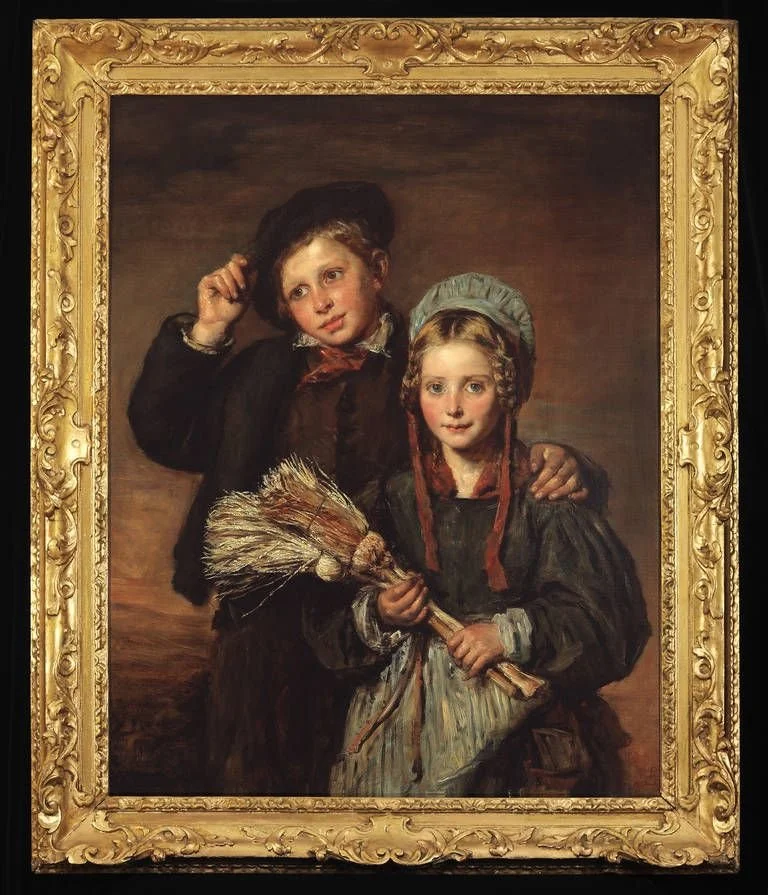
Andrew Geddes (Scottish, 1783–1844) Title: A Peasant Boy and Girl Medium: Paintings, Oil on canvas Size: 36 x 29 in. (91.4 x 73.7 cm.
Rollins Museum of Art, Florida - Given by Paul and Donna Myers in memory June ’41 and Jack Myers ’42 (2015)
Rediscovered Painting by Emma Soyer at Rollins Museum of Art
Until recently the following painting at the Rollins Museum of Art in Florida was attributed to Andrew Geddes (1783-1844), but recent evidence tells us it is a lost work by Emma Soyer. Helpfully it is recorded in an engraving of 1846, which confirms that it was exhibited at the British Society of Artists in 1838 (474) before being sold at Christies in 1859 (124). As things stand it is the only known example of the 5 paintings that her husband Alexis Soyer tried to leave to the National Gallery before his death in 1858.
Read More
Paul Mellon Centre Lecture: Art Historical Ecosystems, Railways and the Newlyn School
Some may be interested in a recent talk I delivered for the Paul Mellon Centre in Exeter, where I tried to make the point that the art historical cycle is incomplete without an art market that periodically furnishes it with new materials.
Hiding in Plain Sight: Is the art market moving away from "Sleepers?"
Some may be interested in a talk I attended back in March, concerning “forgotten masters” and the direction of the art market. Sounds grandiose and brings to mind John Kenneth Galbraith’s “market forecasts exist to make astrologers look professional”, but it was an interesting way to spend an hour.
Read More
Forgotten Masters | Enduring Images - Unfinished Essay
The idea for this exhibition come slowly and fortuitously. In some senses it is a reaction to the dwindling supply of ‘good’ paintings. Those that surface are snapped up by the established dealers, who will then sell them on to the great museums and galleries, where they will be seen and appreciated, safely away from the art market.
Read MoreVáclav Radimský & Claude Monet
in 1895, the Czech artist Václav Radimský (1867-1946) set about painting the waterlilies near to his house in Giverny. Like his close friend Claude Monet (1840-1926), who lived nearby, he did so from an old rowing boat, to which he fitted an easel.
Read More
Francisco Sancha y Lengo (1874-1936 )
Francisco Sancha returned to Madrid in 1922, with a cheerful and optimistic tolerance likely misplaced in a city where political opponents were beginning to murder one another. He resumed his contact with old friends and journals and even included himself in a large group portrait of 1925, which captured the cultural life of the capital.
Read More