
Some may be interested in a talk we delivered at the Royal Academy last week. We recently recorded a reduced version of the same lecture, which can now be found on YouTube. I also include a transcript of the earlier talk below.
————-
Not entirely sure what I’m doing in the middle of this beautiful auditorium. But I understand you have visited similar places in the past few days and have seen for yourself, the differences that separate one artist from another. One period from the next. Perhaps you’ve also seen how condition can impede or confuse the eye. How it often takes imagination to see through the fog and the dirt.
This is a crucial part of dealing. Preparing the eye for how things will look away from the galleries and museums, away from the conservation studios, where we expect to find masterpieces.
But they are not the only places you will find them. And if I can make a useful contribution to the course, then it is to take you away from these places, away from the museums, away from the galleries, to the strange auction houses, where I’ve spent some of my time, and where, among the questionable contents you will occasionally find things of real quality.
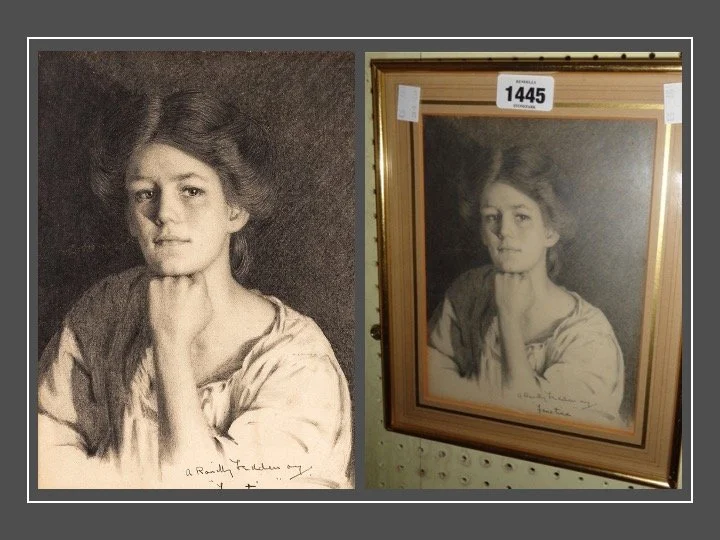
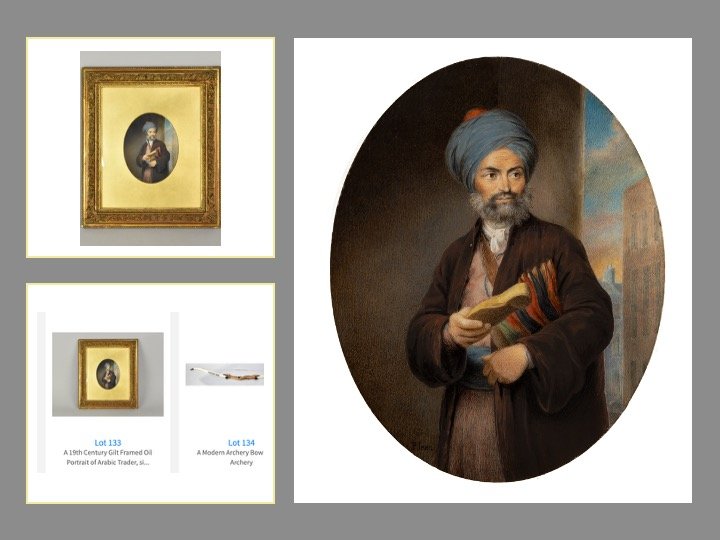
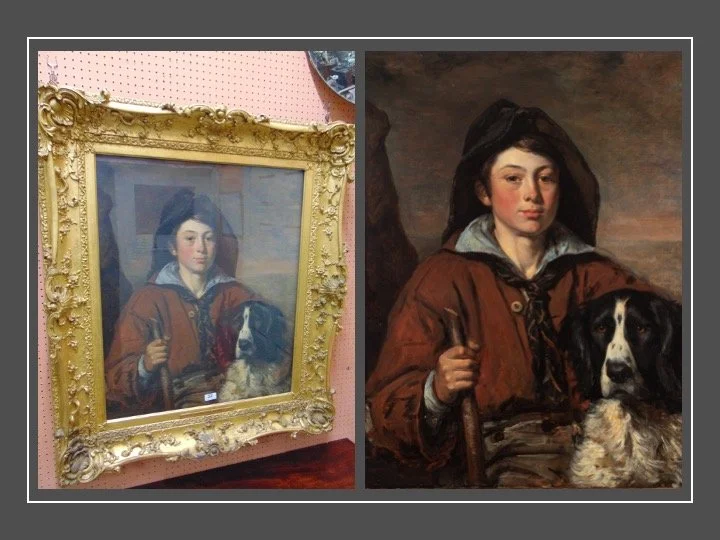
Just a few simple before and afters. No point dwelling too much on what has changed. But it wasn’t the paintings.
Small victories most of them, but you will notice how it would be easier to make a case for their significance from the 2nd photograph and how conversely it would be easier to have bought them from the first. In fact I’d go slightly further: I couldn’t have bought them if the photographs were always good.
So things can change and we have some control over this. Many of you will have seen the recent attempts to raise that status of forgotten artists. It’s nothing new. El Greco, Johannes Vermeer and Botticelli were all forgotten in the 19th century.
And the more recent, modest example of Michaelina Wautier who was completely forgotten 3 decades ago but has recently had an exhibition in this very building. So between stumbling upon her in a museum storeroom in Vienna in 1993, to her landmark exhibition this year. Things have changed a great deal, but the paintings didn’t change. It must have been something else.
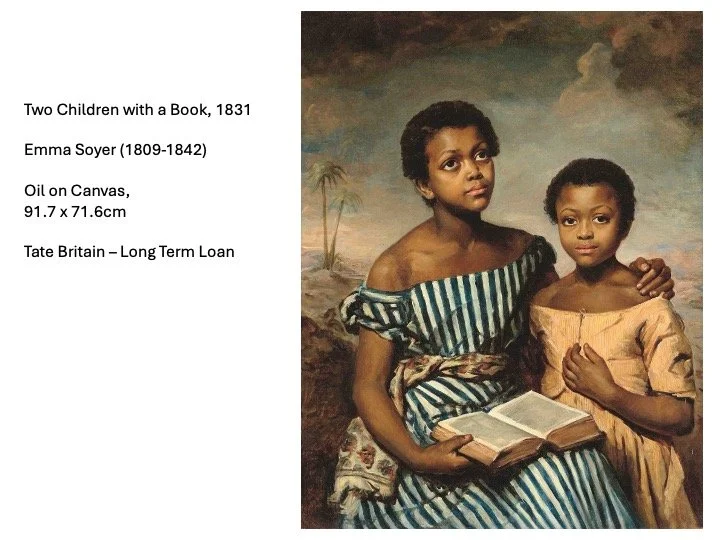
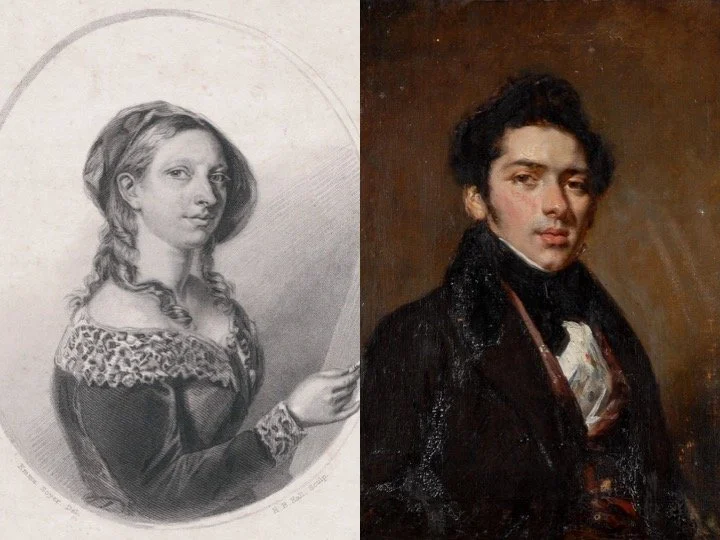
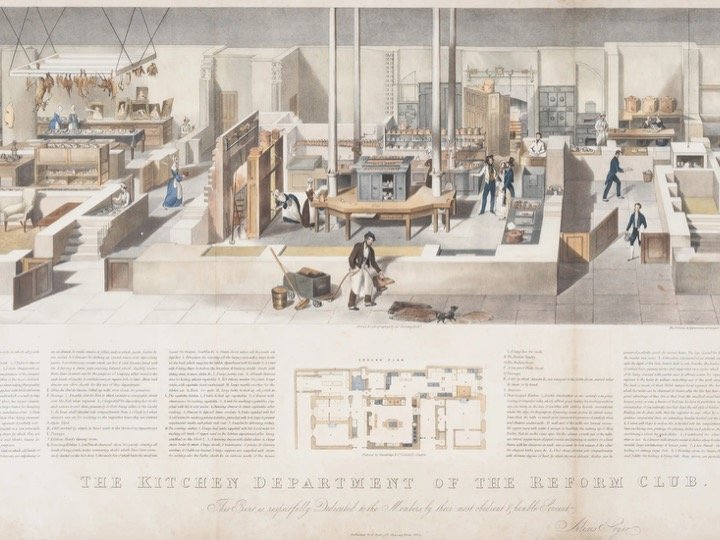
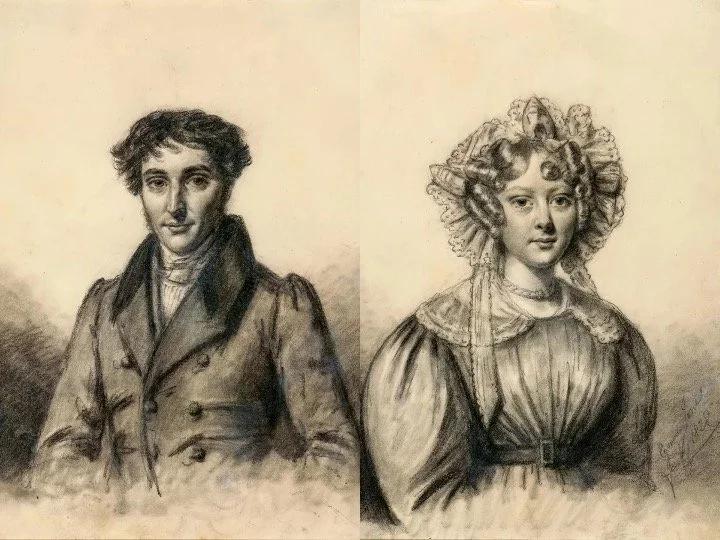
This brings me to Emma Soyer, who before an episode of Fake or Fortune in 2018 was almost entirely forgotten. And we owe some of her modest recent revival, her slow-motion revival (if we can call it that) to that episode, and to the following painting, which is now in the collection of the Tate.
It’s a remarkable picture, painted in 1831, the year the slavery abolition act passed unopposed through the House of Commons. Any museum would be very happy to own it.
Just a brief summary of her life. She was likely born in 1809 in the town of Loose in Kent. Her date of birth is normally given as 1813, but this doesn’t fit with the “32 years” inscribed on her headstone in Kensal Green Cemetery. Her father died when she was four and her mother remarried the Belgian portrait painter Francois Simonau in 1820. A talented artist who had arrived in London in 1815 and opened a drawing school in one of the now demolished streets between Blackfriars and Waterloo. He had trained with Antoine Jean Gros in Paris.
Which gives you a sense of his pedigree. It is also a measure of the family’s affluence that they could afford to pay him to dismiss the rest of his class so that he could focus solely on Emma. Female students were barred from entering the Royal Academy schools. So Soyer benefited from an old fashioned education. In fact she escaped the congested classrooms of her male peers and was educated one-to-one, much like the old masters.
It’s an education that served her well. By her early teens she had already sold over 100 portrait drawings made from life. And she exhibited her first painting at the Royal Academy in 1842 when she would have been about 13. The same age as Landseer.
She died in childbirth in 1842 and if the obituaries are to believed she left over 400 paintings. Until recently about 10 of these were accounted for.
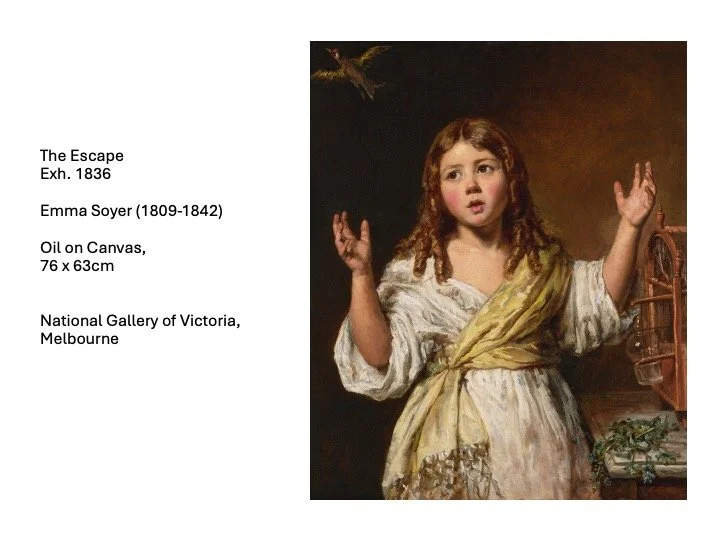
Here is another of hers which turned up in Texas in 2021. It missed the recent frenzied interest in female painters and sold for quite a lot less than the following painting which sold at Christie’s two years later in 2023 for 138,000 pounds. Having sold a year earlier in Belgium for 4000 euros. It is now in the National Gallery of Victoria.
So Art history happening in real time
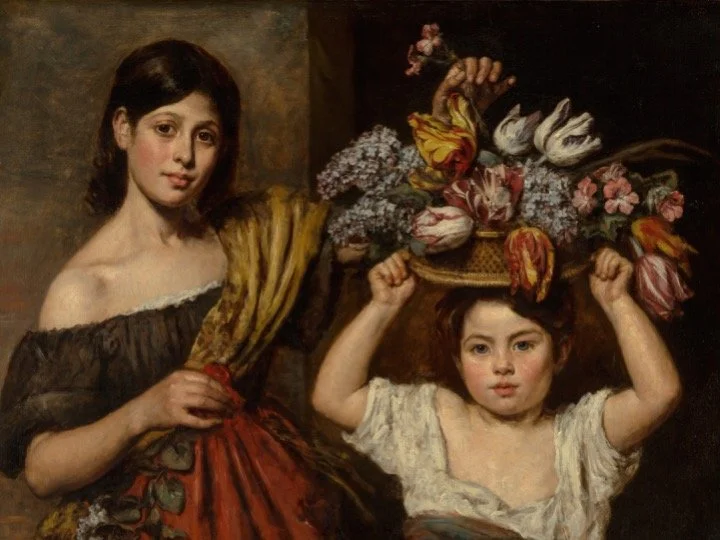
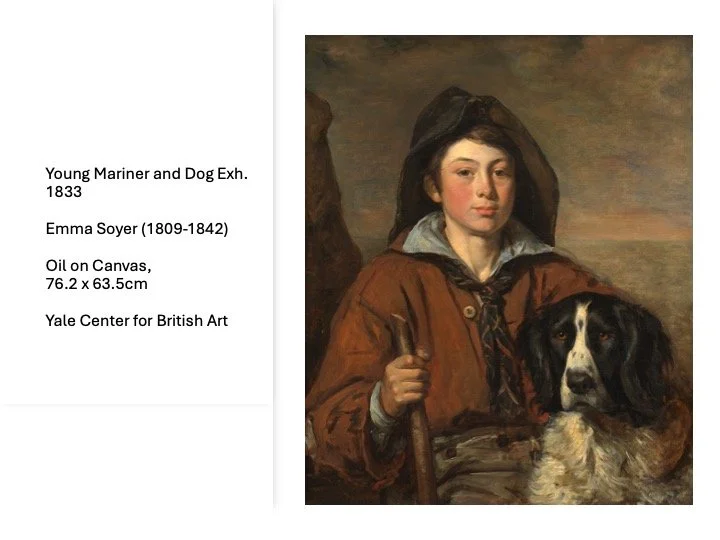
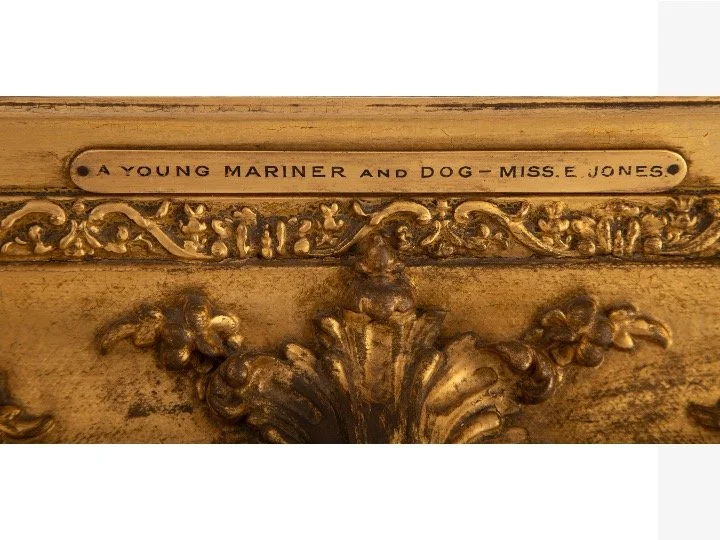
This painting is now in the collection of the Yale Center for British Art and I know it quite well. It turned up in small auction in north Wales in 2024 and it was my first introduction to Soyer when I bought it. I’d like to say the discovery was the consequence of painstaking research and sound connoisseurial judgement. And you will often hear people saying things like “I knew this was so-and-so when I saw these brushstrokes” or stuff like that. I could say in this case that “I knew this was by Emma Soyer when I saw her name on the front of the frame. I could tell. I just knew.”
But in my defence, what I would say, it was in her maiden name of “Jones”, which is a bit like finding a Picasso signed “Ruiz.” Incidentally he discarded his father’s Ruiz for his mother’s Picasso quite early on, rightly believing that it was more memorable.
The first I heard of Soyer, but I liked the image. I liked the image. It was good quality. And this is often how it goes as a dealer. Not always a case of knowing exactly what you are buying, it’s generally more of an instinct, an understanding that there is something there which is worth pursuing.
So the painting arrived. It was delivered to me down in Plymouth and I wasn’t really sure what I was going to do next. I mentioned that one of her paintings had recently done very well at Christie’s and female painters were having a moment. So I made discreet enquires.
Can’t remember exactly when I changed my mind, though I suppose it became increasingly obvious even to me that this was an artist of real potential. An artist who hadn’t really been studied by any art historian, despite their being plenty of material. In British painting she represented the almost impossible phenomenon of the forgotten female old master. In art historical terms the even rarer case of the forgotten, but well-documented genius.
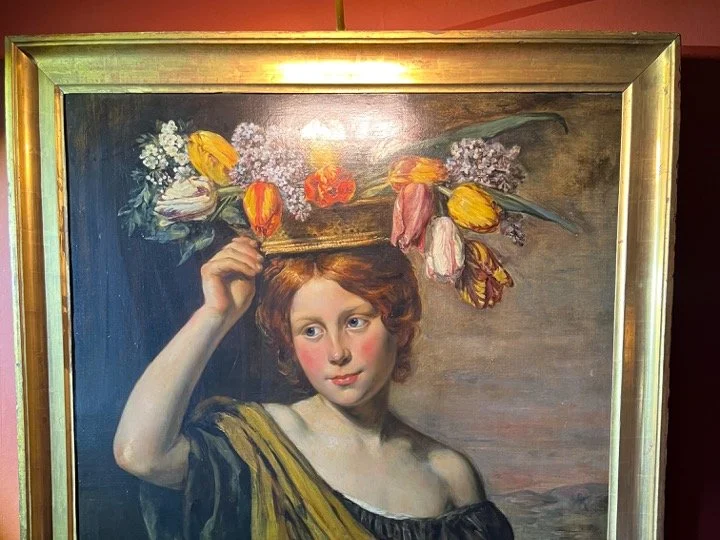
But it is difficult to make a case for genius when you cannot find the paintings. And it is a common misconception that value depends on rarity. Certainly the works of established master benefit from being difficult to obtain, but for forgotten masters, their revivals depend on large bodies of work, preferably in places where they can be seen and appreciated. Enough of them to make a market. Enough material for the academics.
So we looked. We looked in all the usual places. A very thin folder in the National Portrait Gallery archives revealed three of them. An even smaller one in the Witt library revealed one, while the database of public collections Art Uk revealed none of them.
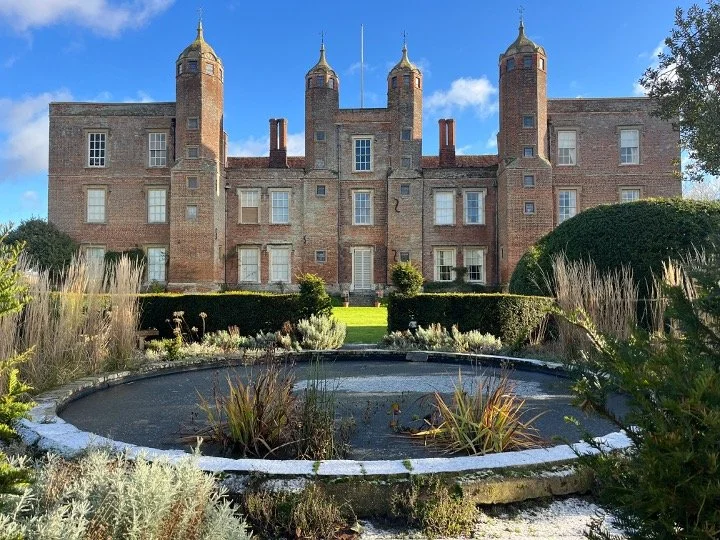
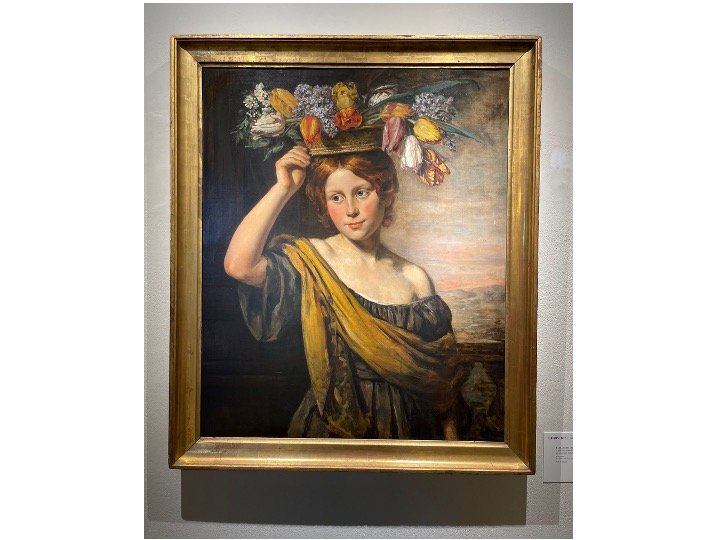
So it was with some excitement that I received news of the following painting from Adam at Melford Hall, in late 2024. It’s about an hour away by train. Christie’s had visited in 2008, leaving a valuation of 1500 pounds. Sounds absurd, but about right for an anonymous painting.
For the next part of the story you must see us as enthusiastic and naïve bunglers. Certainly she was an obsession by this point and her paintings were eluding us. So rather unwisely we told them exactly why they had and offered to help if they ever wished to sell it.
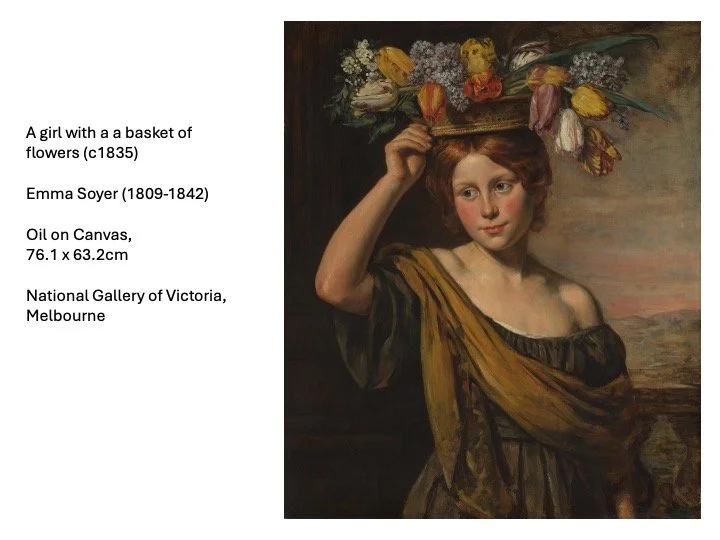
We didn’t really hear anything more about this, until I received a message from a friend showing me the following painting in Christie’s, hanging perilously close to their private sales department. More recently I noticed it had been acquired by the National Gallery in Melbourne, their second painting by Soyer.
A shame not to get the credit, but nice to be correct. And a painting that was once valued at 1500 pounds is now in a world class museum. So again art history happening in real time.
A lesson perhaps in the simplicity of connoisseurship, but also a lesson in human nature, subtlety. An example of where our appetite for discovery can work against us.
It’s been said that Basque fishermen were fishing off of Nova Scotia, many years before Columbus sailed across the Atlantic. But they weren’t in any rush to tell anyone about their discovery and kept it to themselves. Perhaps a similar thing is true in the Art Market and who knows what discoveries and breakthroughs remain unpublished in the mysterious corridors of Mayfair and St James’s.
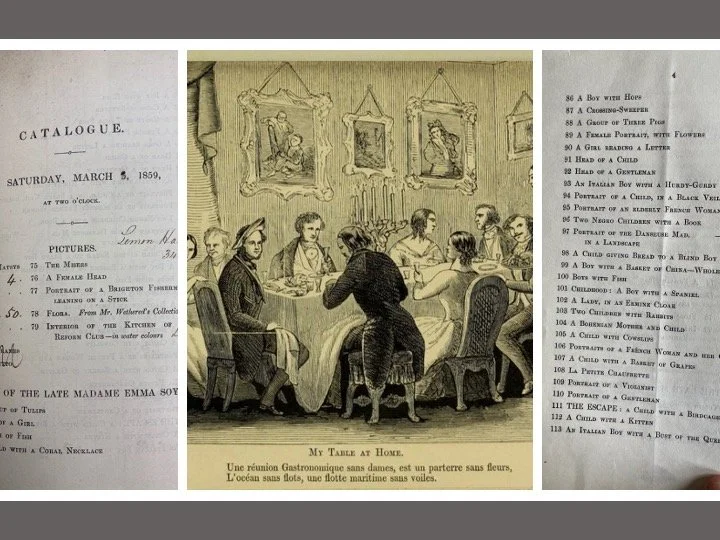
I mentioned that she was well documented. And that many of her paintings are recorded in exhibition catalogues, here at the Royal Academy and at the British Institution. The British Institution is particularly helpful because it gives the dimensions of her work, albeit from the outside of the frame. There is also her studio sale catalogue of 1859, which dispersed 50 works, mostly untraced.
So we consult the evidence before we rely on connoisseurship.
She is also highly distinctive and doesn’t seem to belong to any obvious artistic tradition. When we think of some of the limitations of connoisseurship, we think of those artists who were influential enough to have attracted followers and perhaps busy enough to have employed assistants. This creates artistic circles, networks which can often be very difficult to untangle. No such problem with Soyer.
So isolated enough to be distinctive, but also forgotten to the point where there was no historical advantage in attributing paintings to her. In fact it was an advantage to do the opposite. And I understand you will be hearing from Shaun Greenhalgh in the next few days, whose book I enjoyed a great deal, but I can tell you there would have been absolutely no point in him faking a Soyer. Not back then at least. It just wouldn’t have been worth his time.
So when working on famous painters, we often find ourselves swimming in murky waters, muddied by all sorts of characters over the years, for all sorts of reasons. With Soyer the waters are comparatively clear.
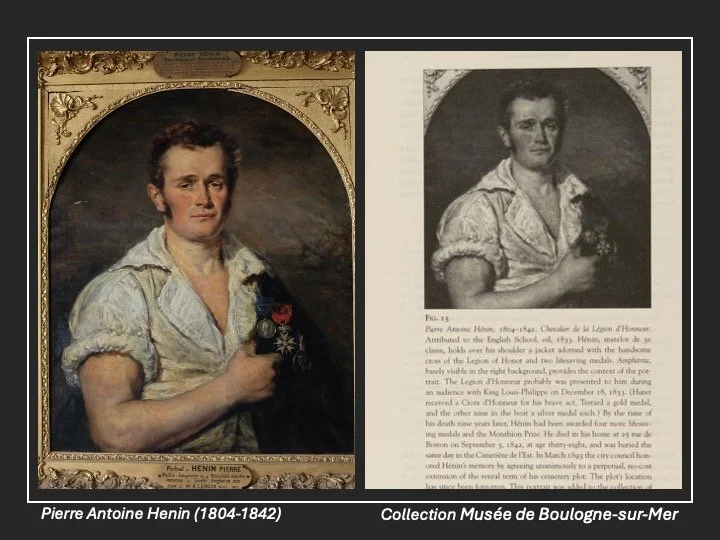
On the subject of swimming. This is a portrait of Pierre Henin, a lifeguard from Boulogne, best known for his part in the sinking of the Amphitrite in 1833. A prison ship carrying 108 female prisoners and 12 children, which ran aground in Boulogne harbour in a bad storm. He was a very strong swimmer and he swam out to the ship to try and rig a lifeline to the shore. The captain refused his help and the ship sunk in full view of the gathering summer crowds. I believe there were about three survivors.
So a huge story at the time, as you can imagine. Turner painted this very large canvas of the subject, which he didn’t exhibit and never titled. Perhaps it was too much of a tragedy.
I found it largely by accident when I was searching as I tend to do in the online archives, in an obscure book on maritime disasters. And I could see even from the small black and white photograph that it was definitely one of hers.
The painting is in the collection of Boulogne Museum and they didn’t know who had painted it. But they knew it had been painted by an English painter in 1833. We happen to know that Soyer visited Boulogne in 1833, she exhibited two paintings from Boulogne in early 1834. She also exhibited portraits of the wife and child of Pierre Henin in Liverpool in 1839.
So in this case, again I’d like to say the result of imaginative and intelligent research, but it was simply a case of typing “Pierre Henin” into an online search engine, an online archive, and seeing what results it threw up and in this case I’m very happy that I did.
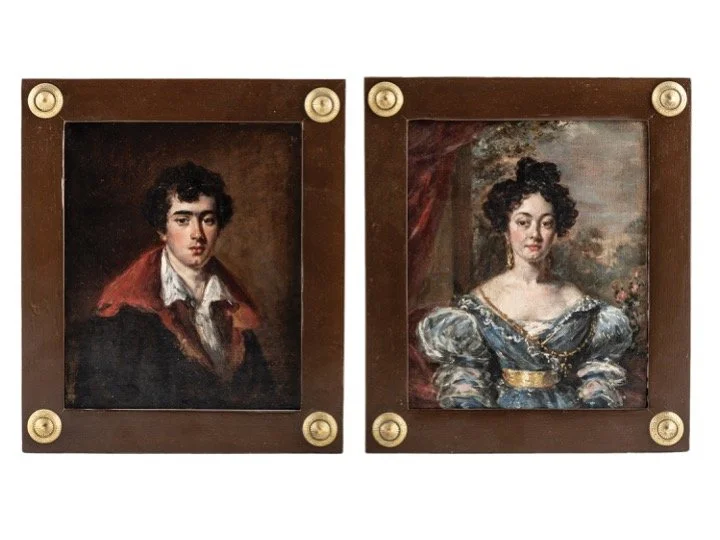
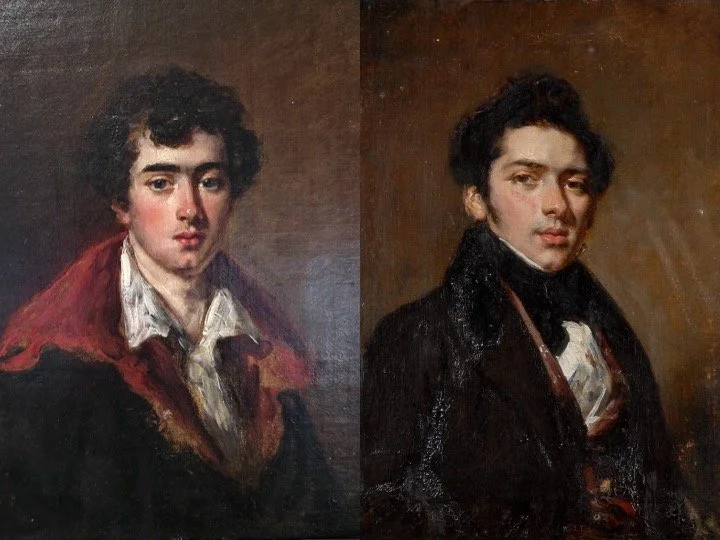
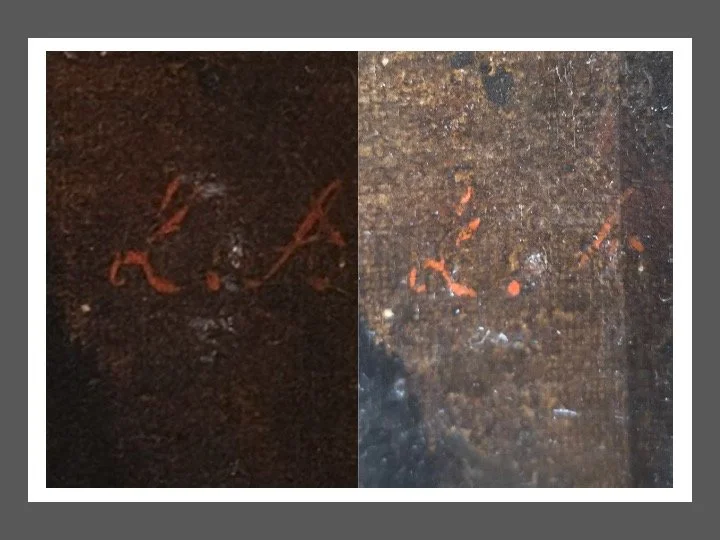
But it’s not always as simple as that and I flew to Madrid for these and expected to buy them without too much difficulty. They had been sold a year earlier as anonymous paintings and one of them was signed with a monogram, which looks to me like an “E.S.” It was perhaps one of the few cases I’ve ever seen, where a monogram became less clear after cleaning. And if you look the carefully the tail at the bottom of the “S” is strangely absent from the second photograph and it looks like an “A.”
This time around they were being sold as unprecedented rediscovered for Leonardo Alenza, an obscure follower of Goya. They had been show to an Alenza expert and I seem to remember the catalogue bandied about phrases such as “fundamental documents for the creative process”, “rare early works…” etc.
Which struck me as exactly what one might say if they could produce no convincing comparisons.
But not to worry. Alenza is not an expensive painter and in many ways the attribution was an advantage. Anonymous paintings tend to attract more scrutiny. They invite anoraks like ourselves to try and identify them. Paintings shielded behind mistaken attributions attract less attention. People tend to conclude, reasonably enough, that if they are given to one artist, then there are probably good reasons for this. And sometimes there are.
But there’s an ominous sign that all dealers have experienced when the auctioneer chooses to take a short break just before the lot you are waiting to bid on. Long enough to mobilise the telephones. Two of them in this case. They sold for 8000 euros. Not to me.
I thought about it a fair bit on the way home. As you can imagine. Should I contact the auction house, should I try and contact the buyer. I decided quite quickly that this was exactly the kind of thing a disgruntled underbidder would have done and that I’d look especially ridiculous finding problems with paintings I had just flown to Madrid to try and buy.
So a very strange situation where two specialists in different painters have come to such wildly different conclusions. And if connoisseurship can lead us in such different directions should we really trust it.
Certainly we have to be careful. Experts perhaps most of all. Because it is difficult to profess ignorance when you are put on the spot. And perhaps if you had spent your life working on a painter like Leonardo Alenza, you might make strange decisions, when faced with a rare and enthusiastic audience. Even if the paintings under question bore a questionable resemblance to everything else he had ever painted.
So connoisseurship depends on the connoisseurs. Who are human like the rest of us. Some paintings attract multiple claimants and some artists have their fashionable moments.
So we spend our time untangling previous errors, or trying to at least, and we search for Emma Soyer in the output of other painters.
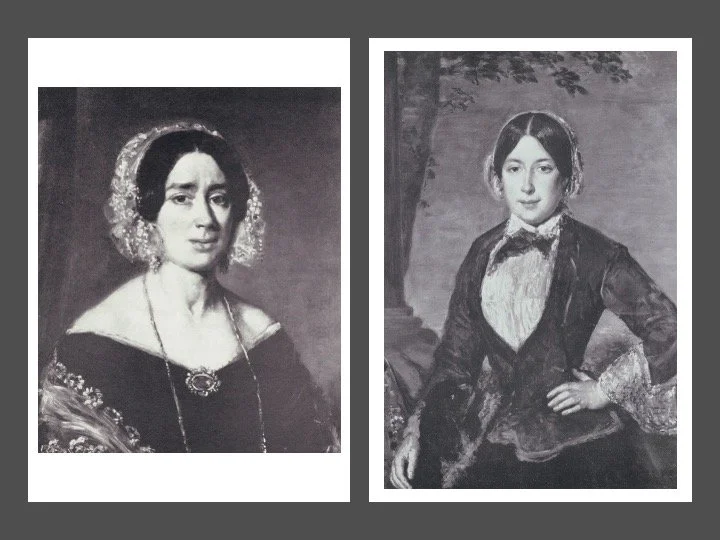
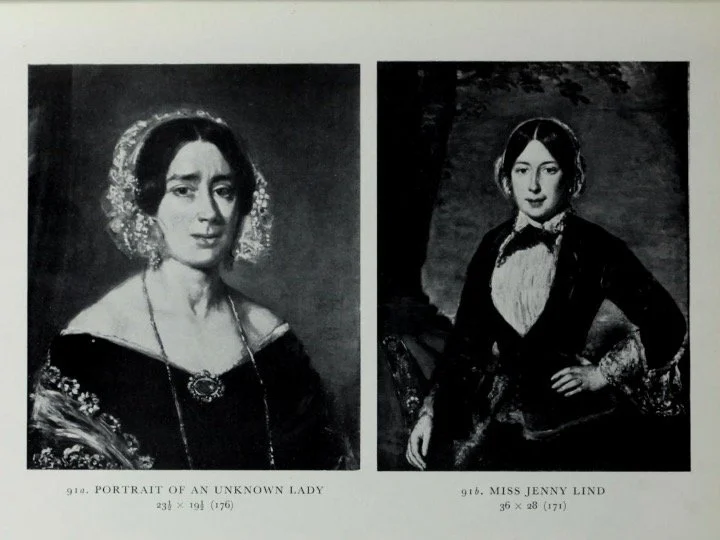
These turned up in the Witt Library in the file for William Etty. A slippery artist, who often defies classification and who for whatever reason has become something of a catch-all for difficult paintings over the years.
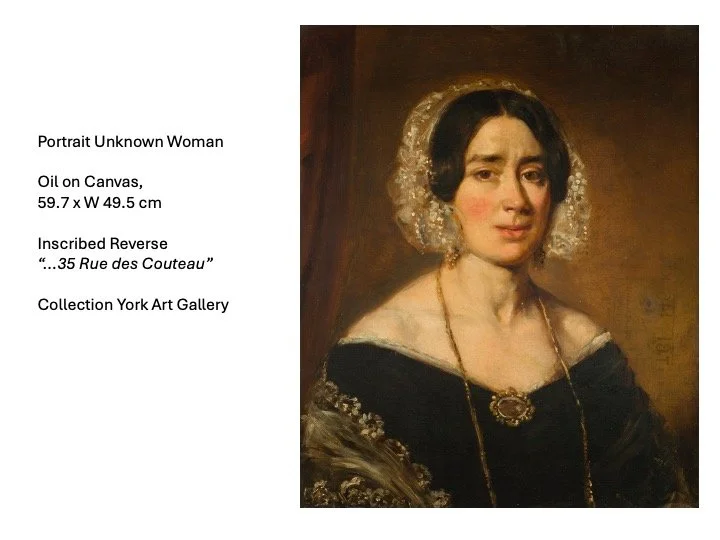
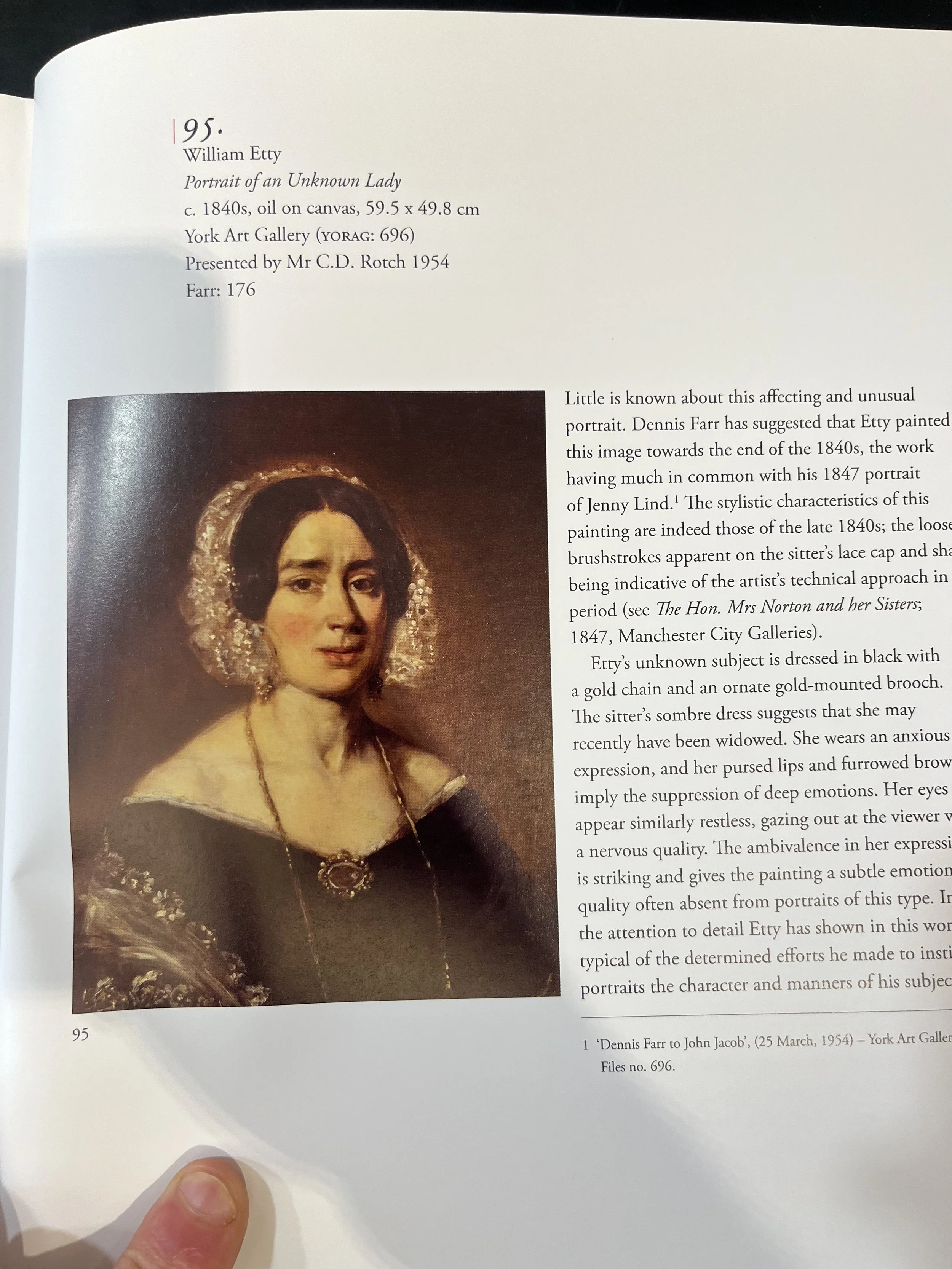
Let’s stick with the first for the time being. It’s at York Art Gallery and it was included in their Wiliam Etty exhibition in 2011. A grand affair accompanied by a large and heavy catalogue, with five different authors. The painting had a page to itself.
This is all well and good, but it has the address of Soyer’s second cousin in Brussels on the reverse. We had made the stylistic connection before identifying the address. Google gives us the rather strange, and perhaps unique luxury of looking at paintings one moment before moving to Belgian address directories a moment later.
No such luxury when Dennis Farr was compiling his Etty catalogue in 1958. But he based his attribution on one other painting, which he suggested was painted “at a similar time” and “in a similar style.” Yes you may have noticed it.
So both of us seeing the same connection, independently of one another, but reaching different conclusions based on the information available to us. Not exactly a failure of connoisseurship, but perhaps evidence of its limitations and its promise.
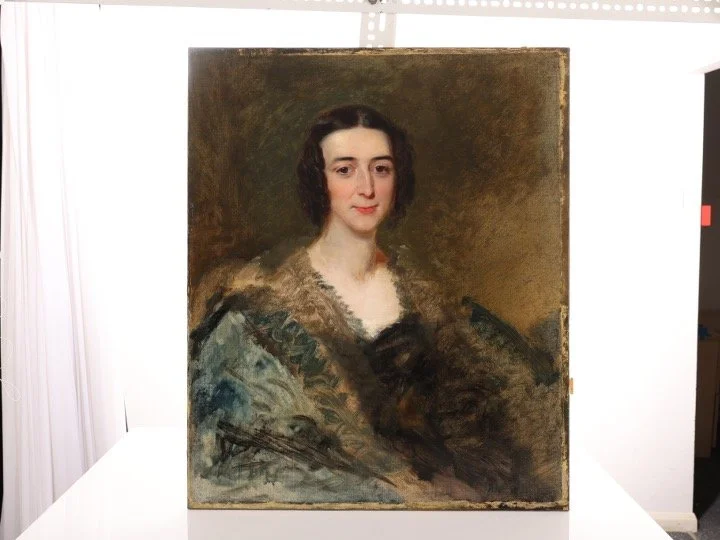
This painting is something of a cautionary tale. Not because it definitely isn’t by Soyer, but because there is absolutely no way of telling.
Most dealers have paintings like this. Loose-ends, which offer no possibility for further research. And until new material surfaces - if it surfaces - to offer a convincing comparison, then they must remain as anonymous works. And we mustn’t be in any great rush to find an attribution for them.
Much as we use abstract reasoning for a practical purpose, possibly as a way for predicting how situations may pan out. We use connoisseurship to determine the paintings that deserve to be researched. The works that offer us some possibility of reaching a firm and meaningful conclusion. In short the works that offer some promise.
Connoisseurship is a means-to-an-end. Not the end in itself. And experts must resist the temptation to imagine that their own expertise can account for a basic lack of evidence.
So, I hope I’ve given a sense of where connoisseurship can lead. How it depends on the information that is available to us and how that information is constantly changing.
I hope I have also given you a sense of its limitation. For though meaningful art history is impossible without it, there are clearly many of them.
And the many useless conclusions, even obfuscatory ones, it has thrown up over the years are not arguments against connoisseurship, but perhaps arguments against the connoisseurs. Some of them at least.
Dominic Sanchez-Cabello